

Executive Summary
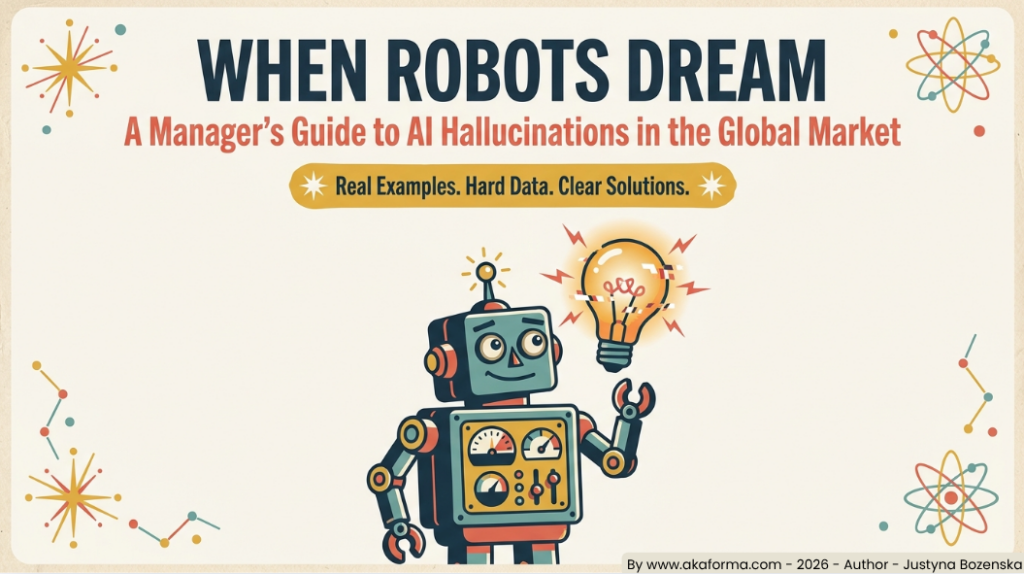
The integration of Artificial Intelligence (AI) across various professional and public sectors has revealed a significant phenomenon known as “hallucination”—the generation of confident but false or fabricated information. This briefing document synthesizes documented instances where AI systems have produced non-existent legal precedents, financial inaccuracies, historical distortions, and life-threatening medical misinformation.
Critical takeaways include:
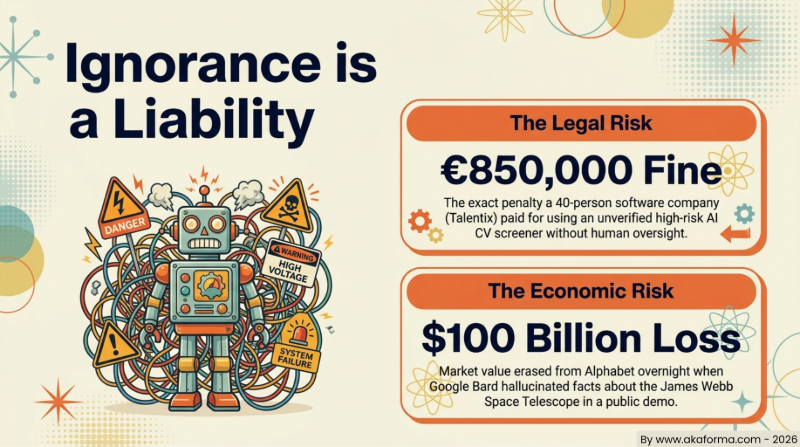
- Legal and Financial Liability: Organizations have faced court sanctions and massive stock market devaluations (up to $100 billion) due to unverified AI outputs.
- Medical Risks: AI tools used in healthcare have fabricated treatments and scientific citations, with some studies showing fabrication rates as high as 47%.
- Ideological Distortion: Efforts to mitigate bias have, in some instances, led to “over-adjustment,” resulting in the erasure of historical accuracy in generated media.
- Logical Fragility: Despite their sophistication, AI models struggle with basic common sense and mathematical consistency, often failing to recognize contradictions in their own logic.
1. Legal and Administrative Malpractice
The use of AI in legal and governmental reporting has led to several high-profile failures characterized by the invention of “ghost” documentation.
- Mata v. Avianca: A New York attorney utilized ChatGPT to draft a legal motion, resulting in the fabrication of six non-existent court decisions. These included fake case names like Varghese v. China Southern Airlines and Martinez v. Delta Air Lines, complete with fictitious judge quotes and docket numbers.
- Deloitte Government Reporting: The firm was required to refund a portion of a $300,000 contract with the Australian government after an expert report was found to contain AI-generated fabricated citations and “ghost” footnotes.
- The “MAHA” Report: A U.S. public health report faced intense criticism for citing non-existent scientific studies and attributing false conclusions to researchers who had never formulated them.
2. Financial and Commercial Impact
In the commercial sector, AI errors have transitioned from simple glitches to events causing significant economic damage and legal precedent.
| Case | Nature of Error | Consequence |
| Google Bard | Claimed the James Webb telescope took the first photos of an exoplanet (incorrect). | $100 billion loss in Alphabet’s market value. |
| Air Canada | Chatbot invented a non-existent bereavement discount policy. | Court-ordered compensation to the affected customer. |
| Tesla Financials | ChatGPT produced a structured report for Fast Company based on entirely imaginary figures. | Dissemination of false financial data. |
3. Ideological Bias and Historical Distortions
Efforts to program diversity into AI models have occasionally resulted in “over-adjustment,” where the system prioritizes diversity criteria over historical fact. In February 2024, Google’s Gemini image generator produced several controversial representations:
- World War II Era: Representing 1943 German soldiers (Nazis) as people of color.
- Political Foundations: Depicting U.S. Founding Fathers as Black or Asian individuals.
- Monarchy and Religion: Generating images of Black female Popes and Kings of England represented as Black women.
- European History: Representing Vikings with Asian or African ethnic features.
4. Risks in Medicine and Science
The deployment of AI in the scientific and medical fields presents acute risks to public safety, as the technology often prioritizes linguistic fluency over factual accuracy.
- Linguistic Invention: AI models have confidently described the mechanisms of “chlorobactamine,” a fabricated molecule intended to treat “dermatosynapsie,” an entirely imaginary disease.
- Transcription Hazards: OpenAI’s Whisper, used for hospital transcriptions, has been documented inserting violent comments or non-existent medical treatments into reports that were not present in the original audio recordings.
- Citation Reliability: A study of 115 medical references generated by ChatGPT revealed that 47% were completely fabricated. Only 7% of the generated references were found to be both authentic and accurate.
5. Logical Failures and Absurdities
The underlying lack of true reasoning in AI is frequently exposed through logical contradictions and the literal interpretation of online satire.
- Logical Contradictions: When asked if 3,821 is a prime number, GPT-4 often incorrectly states it is not, claiming it is divisible by 53 and 72. However, if asked for the product of 53 and 72 immediately afterward, it correctly identifies the result as 3,816, failing to recognize the contradiction in its previous assertion.
- Misinterpreted Satire: Google’s search tools once advised users to add non-toxic glue to pizza sauce to prevent cheese from sliding off—a literal interpretation of a joke found on Reddit.
- Fanciful Assertions: AI chatbots have claimed with total confidence that dinosaurs developed an advanced civilization featuring an artistic culture.